Place · label

Tartary

European map and book label; its extent and referent change by source and date

What the sources say here: 9 passages

Tartary as the first land after the Flood

Editorial contextTouching on the 'Atlantis' debate of his day, de Tott argues that the high plateau of Tartary must have been the first land inhabited in Asia, the source of the swarms that later poured into Europe as Goths, Ostrogoths and Visigoths. He says a Tartar tradition told him by Khan Krim Giray supports this, and on the next page traces the Crimean dynasty back to Genghis Khan.

this country, possessed at present by the Tartars, must have been the first discovered land in Asia, and the earliest inhabited; the source of that population which first sent forth those swarms which, constantly driven back by the wall of China, and the defiles of Thibet and of Caucasus, fell upon the northern parts of Asia, and overflowed our Europe, under the name of Goths, Ostrogoths, and Visigoths.

Baron de Tott (English translation, 1785)

About Tartars (in general)

Keep in mind

A speculative 18th-century theory based on geography and one conversation, not on evidence; de Tott himself calls it a 'hypothesis'.

Continue in this sourceBaron de Tott's memoirs of the Crimean Tatar court1750 to 1779 · 15 passages

The Tartar 'Rome': 27 royal tombs and 280 monasteries

Editorial contextTravelling on with the Tartars, Pinto describes Lechune, 'head of the false religion of this heathendom, as Rome is among us', with a sumptuous temple holding the tombs of twenty-seven kings or emperors 'of this Tartar monarchy' in chapels lined with silver, and nearby a walled enclosure of 280 monasteries with 42,000 priests. It is a vivid and entirely unverifiable picture of Tartar monumental building.

we came to a city called Lechune, which is the head of the false religion of this heathendom, as Rome is among us, in which there is a very sumptuous temple, with very remarkable buildings, in which twenty-seven kings or emperors of this Tartar monarchy are buried, in very rich chapel tombs

Working translation

Original wording

chegamos a hũa cidade que se chamaua Lechune, que he cabeça da falsa religião desta gentilidade, como o he Roma entre nos, na qual està hũ templo muyto sumptuoso, & de edificios muyto notaueis, em que estão sepultados vinte & sete Reys ou Emperadores desta Tartara Monarchia, em jazigos de capellas muyto ricas

Fernão Mendes Pinto (Peregrinaçam, Lisbon 1614)

About Tartar 'monarchy' and its priests

Keep in mind

Pinto's Tartar episodes are widely regarded as fictional or built from hearsay; treat as claimed travel. Lechune may blend reports of Tibetan or Chinese Buddhist centres.

Transcribed from the page image; long s and abbreviations normalized.

Continue in this sourceMendes Pinto's Peregrination: a Portuguese adventurer's claimed journey through China and Tartary1537 to 1558 · 5 passages

Lead domes, gilded cupolas and three classical orders

Editorial contextThe book dresses its Tartar city in the European classical style of its own day: porticos on pillars and pilasters of the Doric, Ionic and Corinthian orders in the three wards, house roofs of lead shaped like domes with gilded copper cupolas, and at the centre a temple 'like the Pantheon at Rome'. It is a European architect's dream set in Tartary, not a description of anything built there.

The Roof of these Portico's is supported by Pillars without, and Pilasters within … The Doors and Windows observe the same Symmetry. The tops of their Houses are cover'd with Lead, in a Figure of a Duomo

'Heliogenes de L'Epy' (English translation, 1689)

About The 'Heliopolitans', a fictional people

Keep in mind

Fictional architecture. The OCR on this page mixes lines from two columns; the Pantheon comparison is on the next page (n148).

Continue in this sourceA 'voyage into Tartary' that finds a philosophers' City of the Sun1689 · 4 passages

Tartars in huts, now made to build villages

Editorial contextDescribing the lands between Beijing and the Russian frontier, Careri says the vast 'Imperial Tartary' owned by the emperor of China was uncultivated and wooded, and its 'poor Tartars' lived in huts without walled houses, like the ancient nomads with portable dwellings. But the present emperor was now 'civilising' them, beginning to have villages built and gathering them in, with forty tributary princes including the Khalkha.

those poor Tartars living there under huts, without walled houses, in the manner of the ancient Numidians or Hamaxobians, who, all given to the pastoral life, did not even have houses but went to live wherever it was most convenient with their portable huts. But the present Emperor of Tartary, now civilising them well, is beginning to have villages built for them and to gather them into these in communities

Working translation

Original wording

vivendovi que' poveri Tartari sotto capanne, senza case murate, a modo degli antichi Numidi, o Hamaxobiti, che tutti intesi alla vita pastorale, nè men case avevano, ma con loro portatili mapali, ove più concio era, andavano ad abitare. Ma l'Imperador odierno della Tartaria, bene al presente dirozzandogli comincia a far loro fabbricare Ville, e raccorgli entro a quelle in comunanza

Giovanni Francesco Gemelli Careri (Giro del Mondo, part IV, Naples 1700)

About Mongols under Qing rule ('poor Tartars'; Khalkha)

Keep in mind

Careri did not travel there; this comes from Jesuits at court (Grimaldi, Gerbillon, Pereira). The classical comparison is his own.

Transcribed from the page image; long s normalized.

Continue in this sourceGemelli Careri's round-the-world journey: China under the 'Eastern Tartars'1695 to 1696 · 7 passages
Show 5 more passages
CitiesTartary (unlocated, imaginary)Claimed travels of the mid-1600s; printed 1689

Heliopolis: a round city in Tartary with streets like Amsterdam

Editorial contextFrom the top of a column like London's Monument, the narrator surveys Heliopolis. It is round, about three miles across, ringed by a moat fed by rivers, with no building over two storeys. It has three wards named after the Sun, the Council and the Schools, and wide, clean, straight streets like Amsterdam's, lined with trees and flushed by running water.

It is divided into three Quarters or Wards, of which the first in the heart of the City, derives its name from the Sun; the second from the Council; and the third from the Schools. The Streets are wide, clean and streight, like those of Amsterdam

'Heliogenes de L'Epy' (English translation, 1689)

About The 'Heliopolitans', a fictional people

Keep in mind

Almost certainly fiction: the city is an ideal community in the manner of Campanella's City of the Sun, not a place any traveller recorded.

Continue in this sourceA 'voyage into Tartary' that finds a philosophers' City of the Sun1689 · 4 passages

Mass weddings by lot 'toward Tartary'

Editorial contextMendoza passes on a story that in the provinces toward Tartary, and in Tartary itself, governors set an age by which men and women must either enter religion or marry. At the appointed time all who are to marry gather in a designated city, where twelve elders record their names and wealth; if there are more men than women, they draw lots, and the surplus wait until next year. He introduces it with 'they say'.

They say that in the provinces toward Tartary, and in Tartary itself, a certain very strange manner of marrying is customary, which is that the viceroys or governors have set a time for both men and women, so that on reaching a certain age they are obliged either to enter religion or to marry.

Working translation

Original wording

Dizen que en las Prouincias hazia la Tartaria, y en la mesma Tartaria, se acostumbra vna cierta manera de casar muy estraña, y es que los Virreyes, o Gouernadores tienen señalado tiempo, assi a los hombres como a las mugeres paraque hasta llegar a tal edad tengan obligacion, o de meterse en Religion, o de casarse.

Juan González de Mendoza (Historia del gran Reyno de la China, Rome 1585)

About Peoples of the northern provinces and 'Tartary itself'

Keep in mind

Hearsay introduced with 'they say'; the story echoes older European tales (such as Herodotus's Babylonian bride market) and has no clear Asian source.

Transcribed from the page image; long s normalized.

Continue in this sourceMendoza's History of the Great Kingdom of China1575 to 1582 · 4 passages

Philosophers protected by the Great Kam

Editorial contextThe book explains how its peaceful city survives among the Tartars: the Great Kam admires the citizens' honesty and lets them live in peace, and in return they send him a volunteer regiment of 300 young men. That service, the author says, is how they learn the 'Tartarian Language' needed for trade at their fair.

Now altho' they lye surrounded by the Tartarians, yet are they not at War with any body : For the Great Kam, who has always had a high esteem for them, by reason of their Integrity, permits them to live in Peace and Tranquillity one among another.

'Heliogenes de L'Epy' (English translation, 1689)

About 'Tartarians' and their 'Great Kam'

Keep in mind

Fiction; the 'Great Kam' is the stock European name for a Tartar emperor, used here without any real ruler in view.

Continue in this sourceA 'voyage into Tartary' that finds a philosophers' City of the Sun1689 · 4 passages

Why can't there be another Heliopolis, in Tartary?

Editorial contextIn his preface the author answers readers who doubted his story. Many cities share a name, he argues (two Frankforts, two Lyons, two Chalons), so why deny that besides Heliopolis in Egypt there could be the one he describes in Tartary? He also compares his doubters to those who laughed at the idea of the Antipodes before Columbus.

Why must it be deny'd, but that besides Heliopolis in Egypt, there may be that other of which I have given the Relation in Tartary.

'Heliogenes de L'Epy', preface (English translation, 1689)
Keep in mind

The protest of truth is a standard device of imaginary voyages.

Continue in this sourceA 'voyage into Tartary' that finds a philosophers' City of the Sun1689 · 4 passages
Daily lifeTartary (inner Asia)c.1650, from European atlases

'Like wind and water': Katib Celebi on the Tatar character

Editorial contextContinuing from the European source, Katib Celebi describes the Tatars as steel-natured among mankind, restless as wind and water, with the strength of Ahriman and the might of demons. They roam the deserts like the wind; they neither eat bread nor build houses, their horses need neither shoes nor nails, and they cross rivers by swimming. It is the classic European literary picture of the steppe nomad, translated into Ottoman.

Qualities of the Tatars: this people are of steel nature among mankind, and like water and wind their nature is used to motion; they have the strength of Ahriman and the power of demons … they run like the wind; neither do they tire nor do their horses; the horses they ride need neither shoe nor nail.

Working translation

Original wording

واوصاف تاتار بوقوم بنی نوع انسان میانه‌ده پولاد نهادلر وآب وباد کبی طبیعتلری حرکته معتاد اهرمن قوت ودیو زورلو ... ایل کبی یلرلر نه کندولر یورولور نه اتلری درلر بندکلری آته نه نعل حاجت نه میخ

Katib Celebi, Cihannuma (Muteferrika print, Istanbul 1732)

About Tatars (generic)

Keep in mind

A stereotype copied from European books, not observation; a few words at the line breaks are uncertain in the print.

Transcribed from the page image (corpus OCR of this facsimile is garbled).
Continue in this sourceKatib Celebi's Cihannuma: an Ottoman geography of Asia (printed 1732)c. 1650 to 1730 · 4 passages

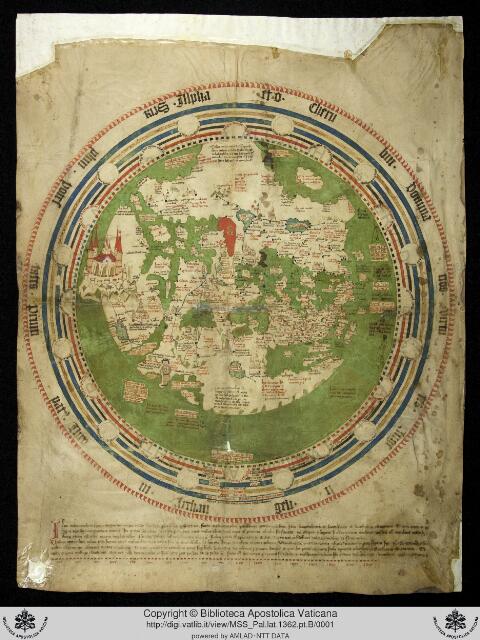
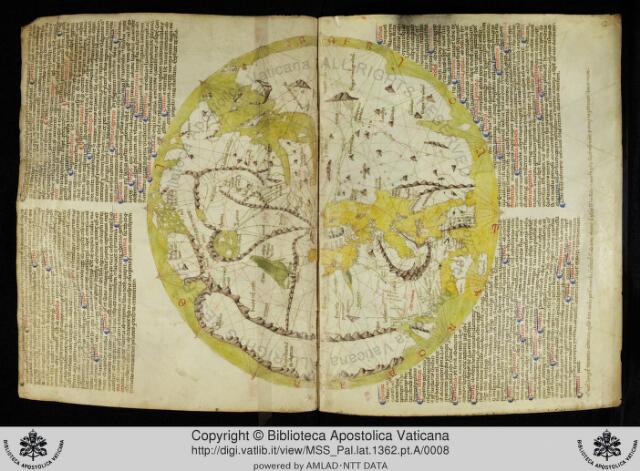
On the old maps

Maps that name Tartary. Eight of 24.

40 sources and maps name this place

  1. c. 1320approximate
  2. 1436exact year
  3. 1448exact year
  4. c. 1450approximate
    Borgia world map
    MAnonymouscompilationM041
  5. 1516exact year
    Carta marina
    MMartin WaldseemuellercompilationM044
  6. 1559exact year
    Second Volume of Navigations and Voyages
    WGiovanni Battista RamusiocompilationW238
  7. 1562exact year
  8. 1562exact year
  9. 1569exact year
  10. c. 1569–1578approximate
  11. 1570exact year
  12. 1570exact year
    Map of Tartary, or the Kingdom of the Great Khan
    MAbraham OrteliuscompilationM047
  13. 1570exact year
  14. 1585exact year
  15. 1602exact year
    Kunyu wanguo quantu
    MMatteo Ricci SJ with Li ZhizaocompilationM118
  16. 1606exact year
  17. 1622exact year
    Chart of the South Sea
    MHessel GerritszcompilationM030
  18. 1635exact year
    Persia sive Sophorum regnum
    MWillem Janszoon Blaeunot statedM005
  19. 1638–1640a range
    The Empire of China and the Evangelical Culture in it by the Jesuits
    WÁlvaro Semedo, Portuguese JesuitfirsthandW244
  20. c. 1640approximate
    Tartaria sive Magni Chami Imperium
    MJoan BlaeucompilationM050
  21. 1667exact year
    China Illustrated by its Sacred and Secular Monuments
    WAthanasius Kircher, S.J.compilationW234
  22. 1674exact year
    Kunyu quantu
    MFerdinand Verbiest SJcompilationM102
  23. c. 1680approximate
    Tabula Tartariae et majoris partis Regni Chinae
    MFrederick de Wit, AmsterdamcompilationM086
  24. 1689exact year
    A Voyage into Tartary
    WHeliogenes de l'Epyclaimed or disputedW071
  25. 1699–1700a range
    Voyage round the World, part IV
    WGiovanni Francesco Gemelli CarerifirsthandW239
  26. 1737exact year
    Nouvel atlas de la Chine, de la Tartarie chinoise et du Thibet
    MJean-Baptiste Bourguignon d'Anvillenot statedM022
  27. 1744exact year
    New Map of Persia
    MIsaak Tirionnot statedM011
  28. c. 1749approximate
  29. c. 1762approximate
    Imperium Russicum omnisque Tartaria
    MTobias Conrad LottercompilationM055
  30. 1770exact year
  31. c. 1785approximate
    Sankai yochi zenzu
    MNagakubo SekisuicompilationM103
  32. 1785exact year
    A General Description of China … and Tartary
    WJean-Baptiste GrosiercompilationW098
  33. 1792exact year
    Chikyu zenzu
    MShiba KokancompilationM113
  34. 1793exact year
    Description of Russia
    WKatsuragawa HoshūcompilationW161
  35. 1807–1810a range
    Shintei bankoku zenzu
    MTakahashi KageyasucompilationM114
  36. 1815exact year
  37. 1836exact year
    Russia in Asia and Tartary
    MHenry Schenck TannercompilationM061
  38. 1836exact year
    Russia in Asia and Tartary, with Western Part of Russia
    MSamuel Augustus MitchellcompilationM062
  39. 1836exact year
    Russia in Asia and Tartary
    MSamuel Augustus MitchellcompilationM063
  40. Undatedno accepted date
    Map of the Far East and adjacent Pacific
    MMarco Poloclaimed or disputedM029